
Write the ownership brief
Value and inputs. The right car supports ordinary life. Record annual mileage, road and weather conditions, passenger and cargo needs, parking, service access, target spend, and a separate reserve.
Result and risk. Produce a shortlist of vehicle types and three to five plausible versions. The typical failure is beginning with a badge and bending every practical constraint around it.
Build one evidence file
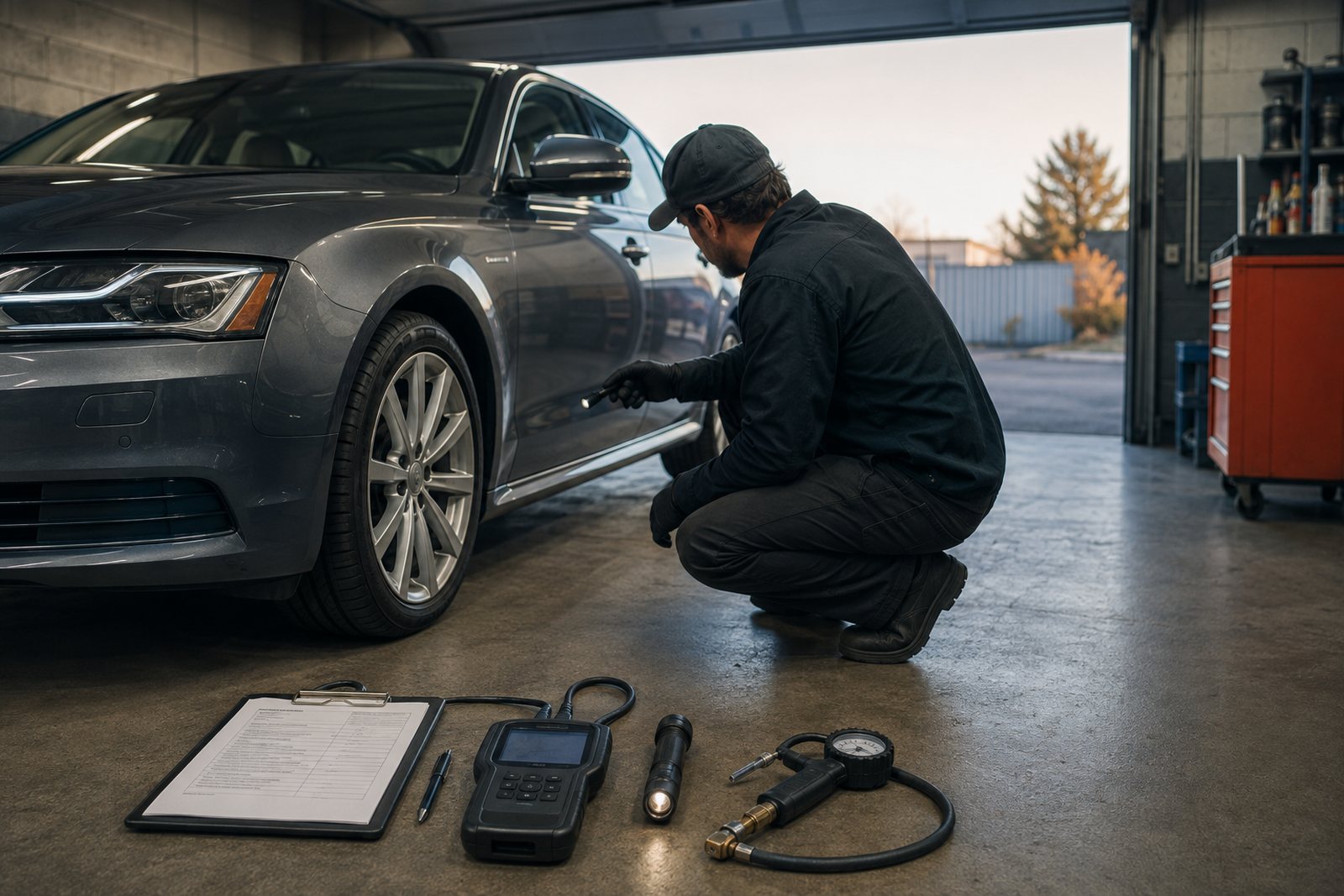
Value and inputs. Title and history data, service invoices, recall status, inspection readings, diagnostics, tires, keys, and seller answers belong in one chronology. Note gaps rather than smoothing them over.
Result and risk. Produce a condition summary with verified facts, open questions, and immediate work. The common risk is treating a clean history report as proof that damage or neglected maintenance never occurred.
Compare exact configurations
Value and inputs. Gather model year, engine, transmission, drivetrain, trim, options, wheel size, safety equipment, and documented running changes. Compare benefits in the context of your brief.
Result and risk. Produce a same-basis comparison with meaningful differences highlighted. The risk is mixing an excellent review of one specification with a listing for another.
Model a normal year and a hard year
Value and inputs. Estimate fuel, insurance, tax, tires, brakes, scheduled work, likely age-related service, local labor access, and a repair reserve. Use ranges when evidence does not support a precise number.
Result and risk. Produce an annual baseline and a separate stress case. The usual error is concentrating on purchase price while treating deferred maintenance as an exceptional event.
Imagine the next listing
Value and inputs. Review comparable supply, days on market where available, mileage bands, specification appeal, condition, documentation, and likely ownership horizon. Value is a range, not a promise.
Result and risk. Produce a resale profile explaining what will help or narrow demand. The risk is assuming rarity always creates value; sometimes it simply creates a smaller audience.
Set the process before negotiating
Value and inputs. Confirm seller identity, title status, payoff or lien process, inspection access, included documents and keys, written terms, and payment and transfer procedures appropriate to the transaction.
Result and risk. Produce a step-by-step transaction checklist and a clear walk-away boundary. The common risk is letting urgency change the evidence standard or skipping independent review because the presentation feels reassuring.